
October 29, 2026
Guatemalan Motmot
By Ajmaq | Birdwatching Guatemala
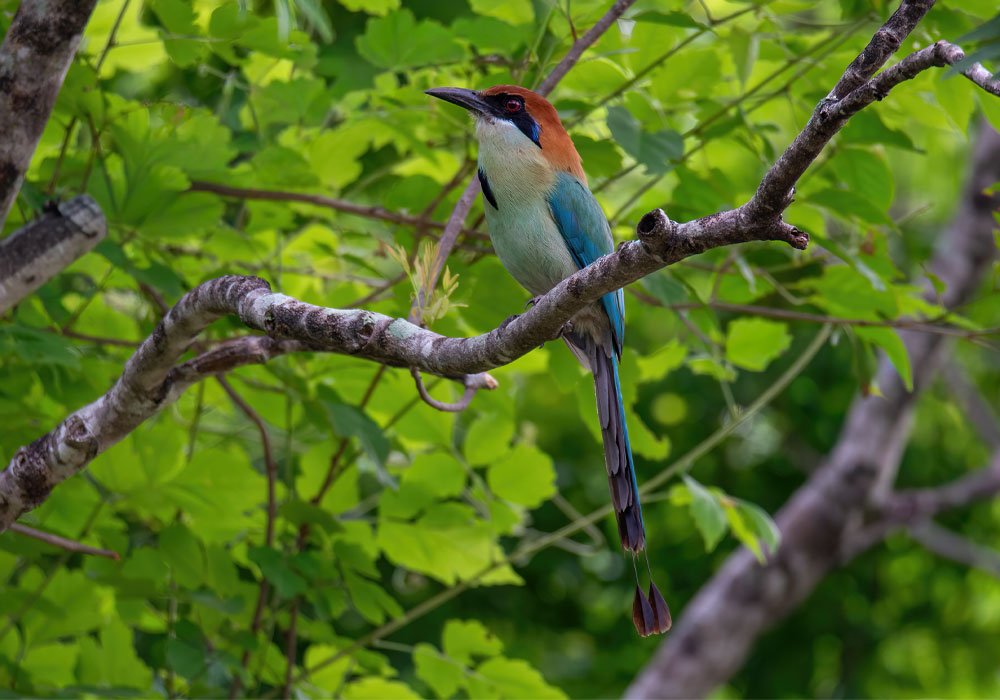
The Guatemalan Motmot (Momotus castaneiceps) gives travelers planning birdwatching in Guatemala a reason to look more closely at the Motagua Valley. With its chestnut crown, broad black facial mask and long tail, this bird belongs to the country’s dry interior—a different environment from the cloud forests and rainforests featured in many birding itineraries.
On October 20, 2026, the American Ornithological Society announced its recognition of the Guatemalan Motmot as a separate species. Birders may already know it from older field guides and trip reports as Russet-crowned Motmot or Momotus mexicanus castaneiceps.
The bird has been known for generations. Its updated classification brings fresh attention to both the species and the habitat where it lives.
Where Can You See the Guatemalan Motmot?
The Guatemalan Motmot occurs in Guatemala’s upper Motagua Valley. The AOS’s 2026 checklist supplement describes it as resident in the country’s interior and lists tropical deciduous forest, gallery forest and secondary forest among its habitats.
That location matters when choosing a birding route. A trip through the volcanic highlands and Petén can offer excellent birding while leaving out the dry interior. If the Guatemalan Motmot is a priority, include it in your target list early enough to allow time within its range.
Our visits in search of this bird include a nature reserve in the region. We consider the outing alongside your other destinations, where you will be staying and how much time you want for observation or photography.
How to Recognize the Guatemalan Motmot
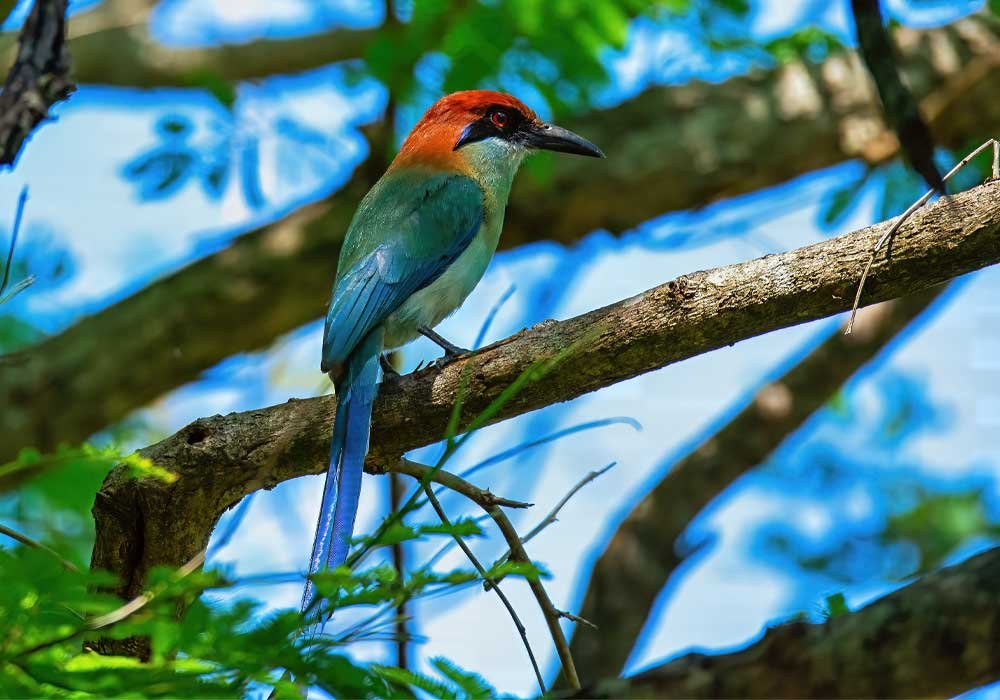
Start with the chestnut crown and nape, broad black facial mask and long tail. A useful identification detail is the pale, whitish area beneath the mask. The closely related Mexican Motmot has an iridescent blue patch in that position, as explained in the American Birding Association’s review of the 2026 checklist changes.
Compare several features together. Light, viewing angle and foliage can make an individual marking difficult to judge, especially in a photograph. Location and voice also help: the AOS checklist identifies differences in appearance and vocalizations as reasons for recognizing the two species separately.
Mexican Motmot also occurs in Guatemala. The updated checklist includes the far west of the country in its range. When reviewing an older Russet-crowned Motmot record, check the precise observation location to help establish which species it represents.
Why Has Its Classification Changed?
The name Momotus castaneiceps dates to a description published in 1855, documented in Avibase’s taxonomic account. The bird was subsequently treated as a subspecies within Russet-crowned Motmot.
The 2026 AOS supplement recognizes Guatemalan Motmot and Mexican Motmot separately. Its announcement credits the proposal by Roselvy Juárez and Pamela Rasmussen, bringing attention to distinctions between populations previously grouped under one species.
For birders returning to an old trip list, this is a reason to revisit the record. Retain its original date and location, together with photographs or notes, and follow the treatment used by your chosen checklist. Older field guides remain useful, although their names may differ from those in updated references.
Is This Guatemala’s First Endemic Bird?
Under the AOS’s 2026 classification, the Guatemalan Motmot is Guatemala’s only living endemic bird species. It is not the country’s first historically: the Atitlán Grebe was endemic to Lake Atitlán before being declared extinct in 1990. The AOS clarified this distinction in its corrected announcement.
A country-endemic species has its natural range entirely within one country. A regional endemic has a restricted range that may cross national borders.
Both can be important targets for visiting birders. The distinction tells you whether a species occurs exclusively in Guatemala or within a wider region shared with neighboring countries.
What About Goldman’s Warbler?
Goldman’s Warbler deserves a place in this discussion because authorities classify it differently. The IOC World Bird List version 15.1 recognizes Setophaga goldmani as a species, as documented by the Integrated Taxonomic Information System. Cornell’s identification guide presents Goldman’s within Yellow-rumped Warbler.
Its range is a separate consideration. Cornell’s guide describes Goldman’s birds as resident in Guatemala and eastern Chiapas, Mexico. Following that source, it should not be described as occurring exclusively in Guatemala.
Goldman’s Warbler remains a worthwhile highland target. When comparing endemic-bird lists, check both the classification being followed and the geographic range. Recognition as a separate species does not automatically make a bird a country endemic.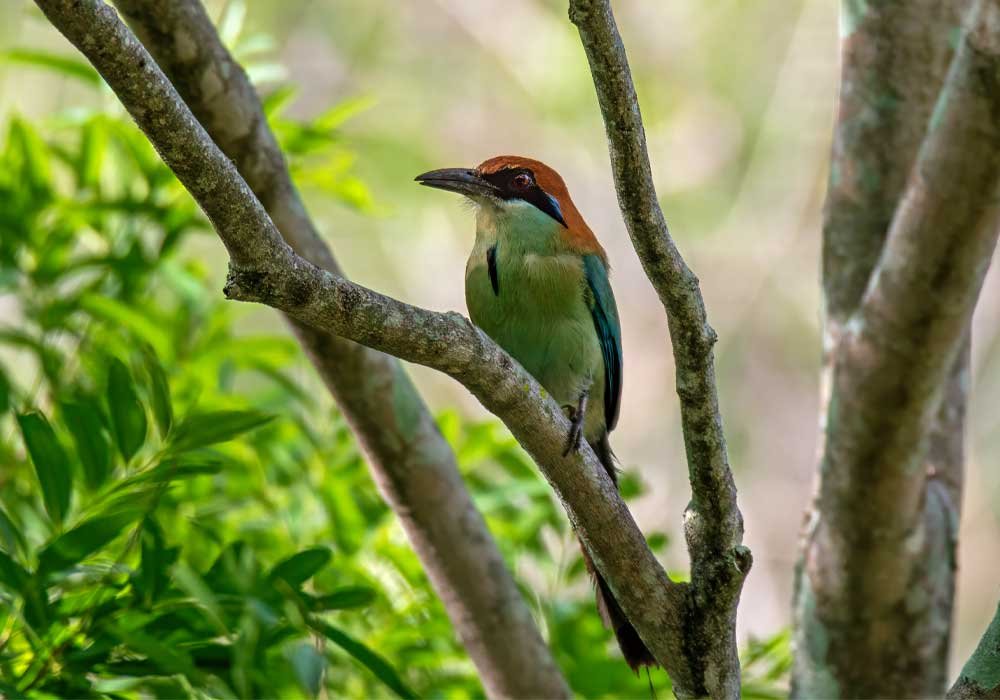
Looking for the Guatemalan Motmot With Birdwatching Guatemala
Our visits begin with your priorities. Some travelers want a good observation through binoculars; others want time to photograph the bird. Those goals can call for different pacing.
A clear sighting does not always produce a clear photograph. Leaves or branches may interrupt the view, and a bird may remain in an awkward position. Allowing more time gives you room to wait without pressing closer or disturbing it.
When planning your visit, tell us:
- Your travel dates and where you expect to stay.
- Whether the Guatemalan Motmot is a main target or one of several birds you hope to see.
- Whether photography is a priority.
- Any walking requirements we should consider.
We use those details to discuss the route and field time. Before the outing, we also explain the expected conditions and what to bring, including drinking water, sun protection, suitable footwear and binoculars.
Sightings depend on wild birds. We cannot promise an encounter, but we can plan a search that gives the habitat and your interests the time they deserve.
Watching With Care
A bird’s restricted range is a reason to pay attention to its habitat. It does not, by itself, establish that the species is endangered.
During a visit, follow reserve rules and your guide’s instructions. Keep your distance from nesting birds, and allow an observation or photograph to pass if obtaining it would cause disturbance. The same care applies whether a bird is newly recognized, common or difficult to find.
Plan Your Birdwatching Trip to Guatemala
If the Guatemalan Motmot is on your list, Birdwatching Guatemala can help you include a Motagua Valley visit within a private birding itinerary.
Send us your travel dates, target birds and photography interests. We will discuss a route and pace that suit the way you want to spend your time in the field.
Sources and Further Reading
- American Ornithological Society: Split Decisions, With a New Endemic for Guatemala. Published October 20, 2026; corrected October 23, 2026.
- Ornithology: Sixty-seventh Supplement to the American Ornithological Society’s Check-list of North American Birds. 2026.
- American Birding Association: 2026 Checklist Redux, by Michael L. P. Retter. October 22, 2026.
- Avibase: Guatemalan Motmot (Momotus castaneiceps). Original description and taxonomic history.
- Integrated Taxonomic Information System: Goldman’s Warbler (Setophaga goldmani). Species treatment citing IOC World Bird List version 15.1.
- Cornell Lab of Ornithology: Yellow-rumped Warbler Identification. Identification and range information for Goldman’s.

Birdwatching Guatemala
Professional Guatemala Birding Tour Operator
Expert-Guided Birding Tours & Photography Adventures
Recent Posts


