
Birding Destinations · Guatemala
Birding the Western Highlands & Cuchumatanes
High pine forests, cold mountain mornings and some of the most sought-after birds of northern Central America, including Goldman's Warbler and the Pink-headed Warbler, set among Mam and K'iche' Maya towns.
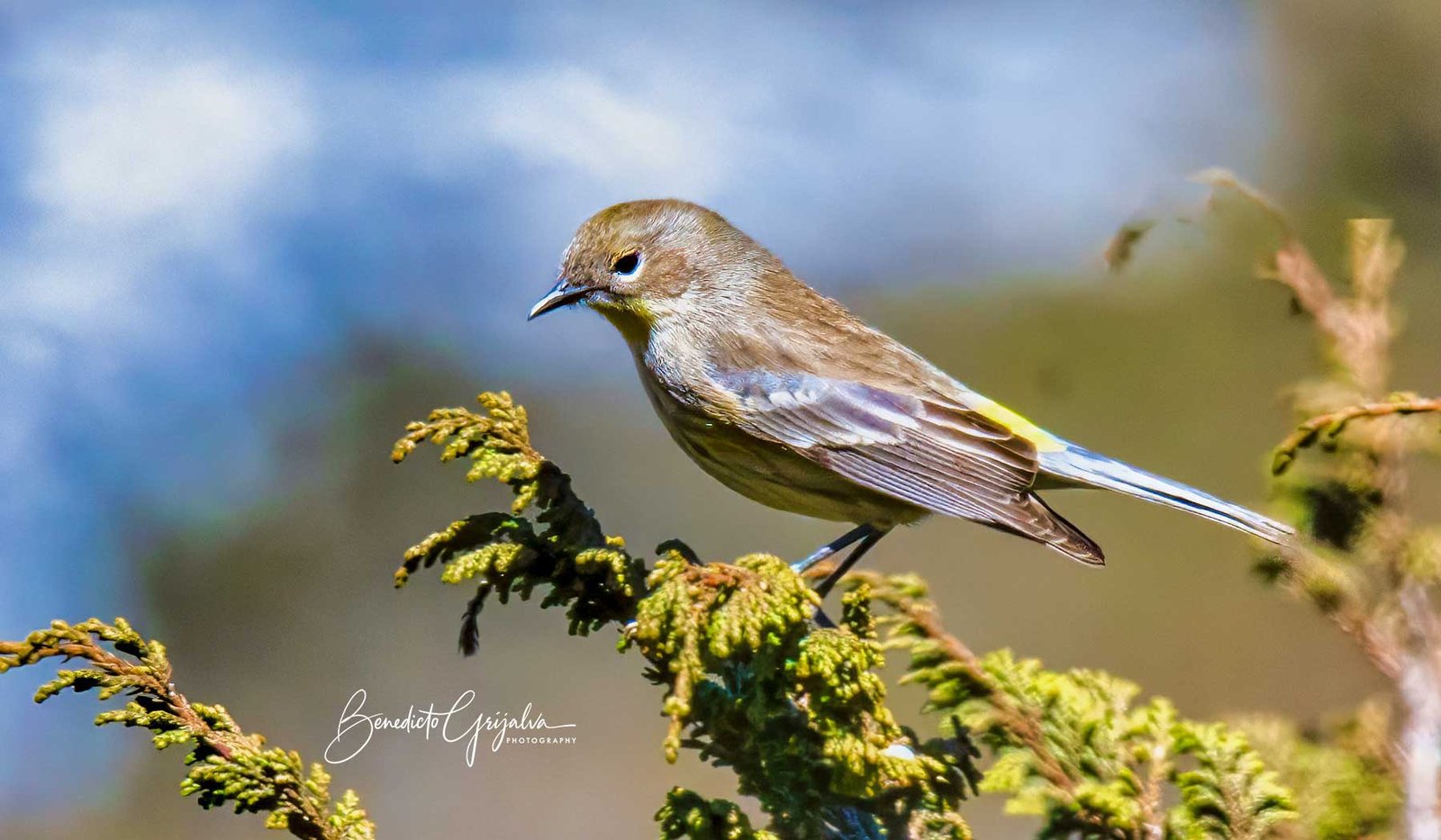
Birding in the Western Highlands of Guatemala means early starts in cool pine and oak forest, from the departments of Huehuetenango and Quetzaltenango up to the high plateau of the Sierra de los Cuchumatanes. This is the place to look for Goldman's Warbler and many other birds of the northern Central American highlands, on private tours with a local birding guide.
- Where: northwestern Guatemala, mainly Huehuetenango and Quetzaltenango, including the Sierra de los Cuchumatanes.
- Altitude: the Cuchumatanes rise to about 3,800 m (12,500 ft) and are the highest non-volcanic mountain range in Central America.
- Key birds: Goldman's Warbler, Pink-headed Warbler, Black-throated Jay, Garnet-throated Hummingbird, Rufous-browed Wren and other highland specialities.
- Best time: November to April, the dry season, with clear mornings and northern migrants. The resident specialities can be seen all year.
- Getting there: about 5 hours by road from Antigua to Huehuetenango, usually broken up with a birding stop at Tecpán.
Why the Western Highlands Are Special for Birds
The Cuchumatanes are recognised as an Important Bird and Biodiversity Area (IBA) and a Key Biodiversity Area (KBA). The site is important for range-restricted birds of the North Central American Highlands and for species found only in the Madrean pine-oak highlands. About half of the area is forest, with conifer, broadleaf and mixed woodland, and the rest is a mosaic of shrubland, grassland and farmland.
Because the mountains climb so high, the birdlife changes quickly with altitude. Cloud forest on the lower slopes gives way to pine and juniper woodland and open grassland on the plateau, so a single day can bring very different birds.
Birds of the Western Highlands
The KBA assessment for the Cuchumatanes lists ten bird species that make the area globally important, including the Pink-headed Warbler, Horned Guan, Highland Guan, Black-throated Jay, Garnet-throated Hummingbird, Rufous-browed Wren, Belted Flycatcher, Black-capped Siskin, Golden-browed Warbler and Green-throated Mountain-gem.
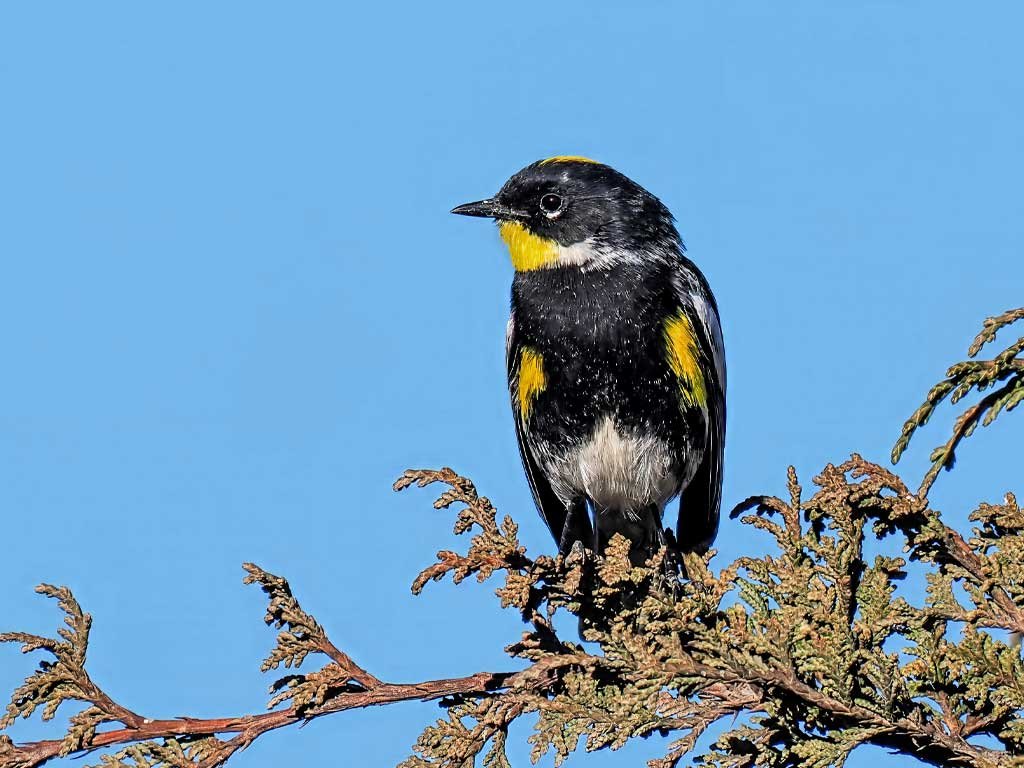
Goldman's Warbler
Setophaga goldmani
The star of the region. It lives in high pine and juniper forest in the Cuchumatanes and nearby highlands. The IOC treats it as a full species, while the AOS treats it as a form of Yellow-rumped Warbler.
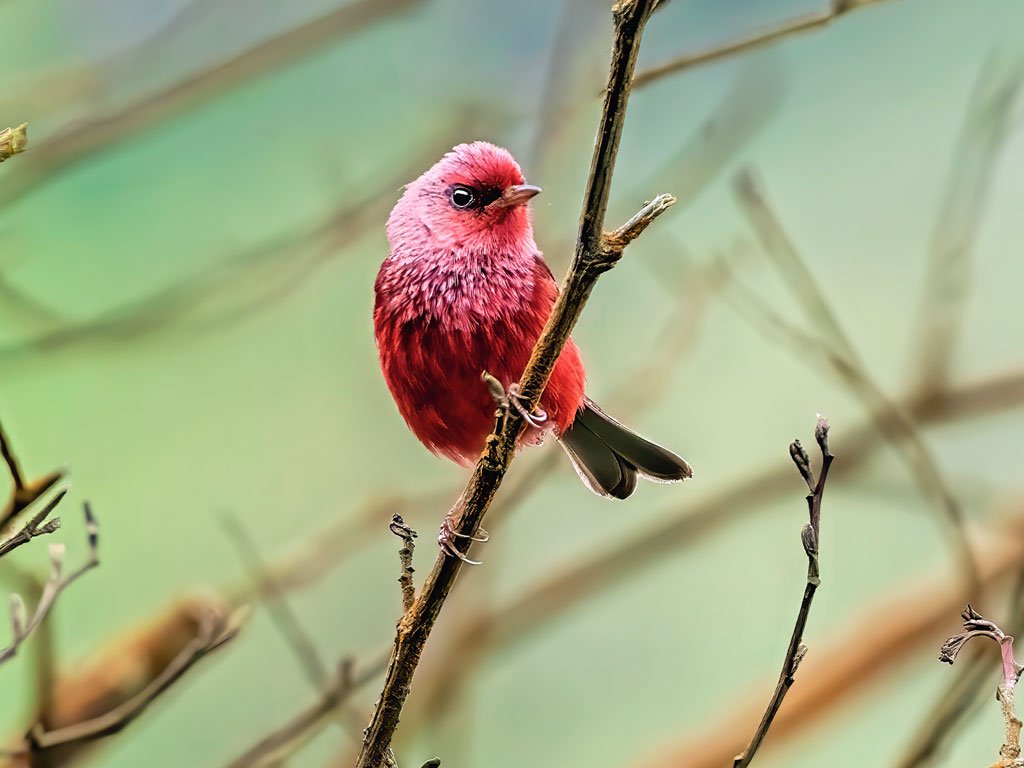
Pink-headed Warbler
Cardellina versicolor
A highland endemic of Guatemala and Chiapas, and one of the birds that make the Cuchumatanes globally important. It is also seen on our day trips to Tecpán.

Horned Guan
Oreophasis derbianus
Endangered and listed for the Cuchumatanes. On our tours we usually look for it on the volcanoes around Lake Atitlán, where it is more accessible.
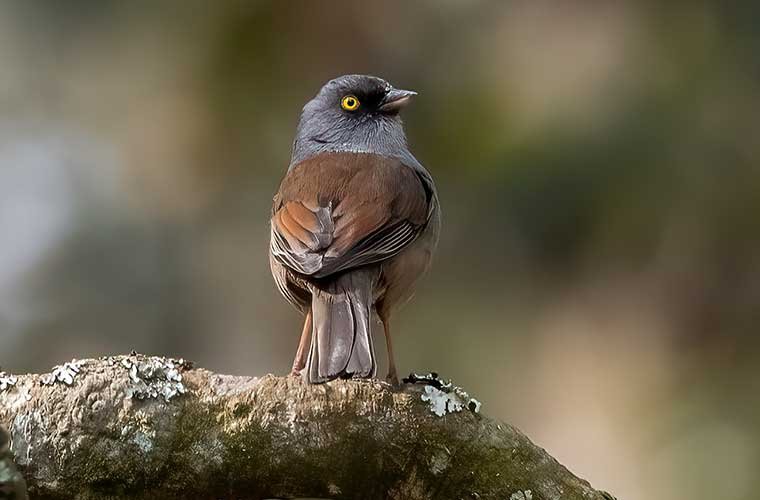
Yellow-eyed Junco
Junco phaeonotus
A common and charming bird of the high pine forests, often seen hopping on the ground beside trails and clearings.
Other highland birds to look for include Mountain Trogon, Unicolored Jay, Brown-backed and Slate-colored Solitaires, Hooded Grosbeak, Black Thrush, Grey Silky-flycatcher, Amethyst-throated Mountain-gem, Pine Flycatcher and Cinnamon-bellied Flowerpiercer. Around Fuentes Georginas we also look for night birds such as the Fulvous Owl and Mexican Whip-poor-will.
Best Birding Sites in the Western Highlands
Further west, the Cuilco valley and the Tacaná–Tajumulco volcanoes on the border with Mexico are also listed among Guatemala's 21 Important Bird Areas.
Maya Culture and Sites Along the Way
The Western Highlands are among the most traditional regions of Guatemala. In Todos Santos Cuchumatán, many Mam Maya men and women still wear their distinctive traditional clothing every day. Near Huehuetenango, the archaeological site of Zaculeu was a capital of the Mam Maya before the Spanish conquest. Quetzaltenango, known as Xela, is Guatemala's second city, with K'iche' Maya villages such as Zunil nearby. On the way from Antigua, the Kaqchikel Maya ruins of Iximché near Tecpán make an easy cultural stop.
When to Go Birding in the Western Highlands
The dry season, from November to April, is the most comfortable time. Mornings are often clear and calm, and North American migrants join the resident birds. Nights and early mornings are cold at high altitude, and frost is possible on the plateau. From May to October, afternoon rain is common, but mornings can still be very productive and the forests are lush and green.
Practical Tips
- Altitude: much of the birding is between 2,500 and 3,800 m. Walk slowly, drink water and plan a gentle first day.
- Clothing: bring warm layers, a hat and gloves for early mornings, plus rain gear and sturdy walking shoes.
- Accommodation: simple, comfortable hotels in Huehuetenango and Quetzaltenango are the usual bases.
- Roads: mountain roads are winding, so private transport with an experienced driver makes the journey easier and safer.
- Equipment: your guide brings a spotting scope. Please bring your own binoculars.
Birding Tours That Visit the Western Highlands
What Birders Say About Western Highlands
Our tours are rated 4.9 out of 5 from more than 220 reviews on Tripadvisor. Here is what two birders said:
“This tour visited so many different areas within the country to see the specialized birds.”
“Bird guides, Maynor and German, are great in finding birds and explaining what we saw in the archaeological sites.”
Frequently Asked Questions
Where can I see Goldman's Warbler in Guatemala?
Goldman's Warbler lives in high pine and juniper forest in the Western Highlands. Our main site is near Todos Santos Cuchumatán in the Sierra de los Cuchumatanes, Huehuetenango, which we visit on our Guatemala Endemics Birding Tour and our Highlands and Mayan World Birding Tour.
How high are the Cuchumatanes?
The Sierra de los Cuchumatanes rise to about 3,800 m (12,500 ft). They are the highest non-volcanic mountain range in Central America, and much of the birding takes place between 2,500 and 3,800 m.
When is the best time to go birding in the Western Highlands?
November to April is the best time, with dry weather, clear mornings and migrant birds from North America. The resident highland specialities, including Goldman's Warbler, can be found all year.
How do I get to the Western Highlands from Antigua?
Huehuetenango is about 5 hours by road from Antigua, and Todos Santos Cuchumatán is about 2 hours further. Our tours travel by private vehicle and usually stop to bird at Tecpán on the way.
Can I visit the Western Highlands on a day tour?
The Cuchumatanes are too far for a day trip from Antigua, so we include them in multi-day tours. For a shorter taste of highland birding, our Tecpán day tour from Antigua looks for the Pink-headed Warbler and other highland species.
Can I combine birding with Maya culture in the Western Highlands?
Yes. The region is home to Mam and K'iche' Maya communities, the Zaculeu archaeological site near Huehuetenango and the city of Quetzaltenango. We can add cultural visits to any private itinerary.
Explore Other Birding Regions
Plan Your Western Highlands Birding Trip
Tell us your dates and target birds, and our local team will design a private itinerary for you.
Sources: Key Biodiversity Areas factsheet: Cuchumatanes · Important Bird and Biodiversity Areas in Guatemala · Biomes of Guatemala · Goldman's Warbler: evolution and conservation · How to choose a birding tour in Guatemala